The People Behind the Pint: Inside Sicily's Small Dairy Farms That Make Ono's Gelato Worth Every Bite
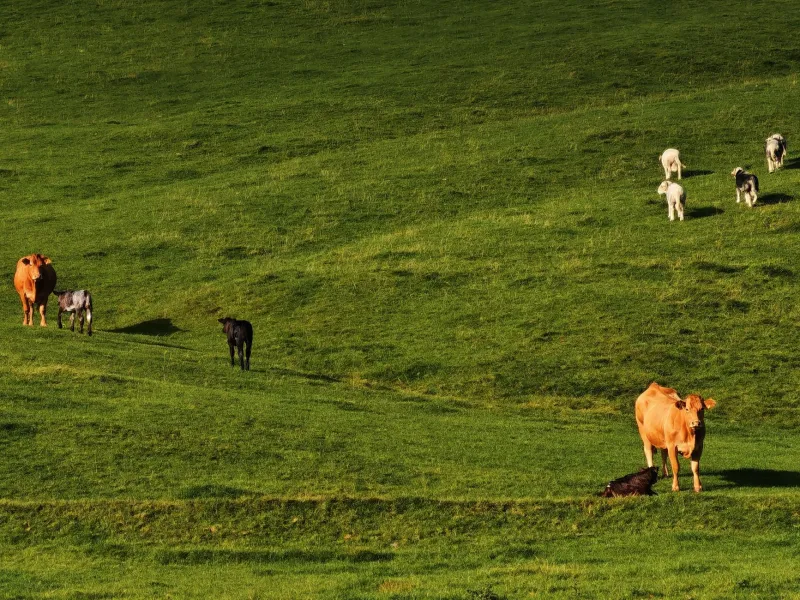
There's a moment, somewhere between opening the lid and taking that first spoonful, when you stop and think: how does something taste this good? It's a fair question. And the honest answer starts not in a production facility or a commercial kitchen, but on a hillside farm in western Sicily, where a third-generation dairyman named Salvatore Tumminello is guiding his cows toward morning pasture before the heat of the day sets in.
At Ono Gelato Company, we talk a lot about handcrafted quality and premium ingredients — and we mean it. But those words only carry weight when you understand what's actually behind them. So let's take you there.
Where Sicily's Dairy Tradition Runs Deep
Sicily doesn't always get the dairy credit it deserves. Most Americans think of the island and picture citrus groves, ancient ruins, and maybe a plate of arancini. But Sicily has a rich, centuries-old tradition of small-scale animal husbandry, particularly in the inland provinces of Ragusa, Enna, and Agrigento. These are places where the land is still farmed the way it was generations ago — not out of nostalgia, but because the results speak for themselves.
The milk that comes from these regions is noticeably different. Cows and sheep grazing on native grasses and wildflowers produce milk with a distinct richness, a slightly higher fat content, and a flavor profile that carries real complexity. It's the kind of milk that, once you've tasted what it becomes in gelato form, makes industrial dairy feel like a completely different product category.
The Tumminello family has been farming in the Ragusa province for over 80 years. Salvatore's grandfather started with a handful of goats and a modest plot of land. Today, the operation is still intentionally small — about 60 head of cattle — because, as Salvatore puts it, "when you try to grow too fast, you stop paying attention to the animals. And when you stop paying attention, the milk suffers."
Small Scale on Purpose
This philosophy of deliberate smallness is something you'll hear echoed across the farms and producers that supply Ono's gelato line. It's not a marketing angle. It's a practical reality.
Larger commercial dairies optimize for volume. Smaller operations optimize for quality. The Tumminellos, for example, rotate their herd across different pastures throughout the year, allowing the land to recover and ensuring the cows are always grazing on the most nutrient-dense grasses available. They don't use growth hormones. They limit the use of antibiotics to cases of genuine medical necessity. And they still do a significant portion of the milking and processing by hand, the way Salvatore's father taught him.
About 40 kilometers away, in the province of Agrigento, the Ferrara family runs a sheep dairy that supplies some of the richest, most buttery base ingredients used in Ono's seasonal specialty flavors. Sheep's milk carries nearly double the fat content of cow's milk, which translates to an almost impossibly creamy texture in the finished gelato. The Ferraras have been working with the same breed of Sicilian sheep — the Valle del Belìce — for four generations. It's a heritage breed, slower to mature and lower in yield than commercial alternatives, but prized for the quality of its milk.
"My daughter asked me once why we don't just switch to a faster breed," says Rosaria Ferrara, who manages the dairy side of the operation alongside her husband. "I told her: because then we'd be making a different product. And we don't want to make a different product."
From Pasture to Process
Once the milk leaves these farms, it enters a careful chain of handling designed to preserve every bit of the quality that the farmers worked so hard to develop. Temperature control is critical. Timing matters. And the people doing the processing — small co-operatives and independent creameries scattered across the island — are just as committed to the craft as the farmers themselves.
Many of these creameries are family-run operations that have supplied regional gelato artisans for decades. They understand that their customers — the gelatieri who will eventually turn their cream into something extraordinary — have exacting standards. There's a mutual accountability built into these relationships that simply doesn't exist in industrialized supply chains.
For Ono, sourcing from these producers isn't just about ingredient quality, though that's obviously central to everything we do. It's also about supporting a food system that's worth preserving. When you buy from small farms and artisan creameries, you're helping sustain a way of life — and a level of craft — that would otherwise be economically vulnerable in a world that increasingly rewards scale over substance.
Sustainability Isn't a Buzzword Here
The word "sustainability" gets thrown around so casually these days that it can start to feel meaningless. But in the context of these Sicilian farms, it describes something very specific and very real.
Because these operations are small, their environmental footprint is inherently lower. Manure is composted and returned to the land as fertilizer. Water usage is carefully managed, particularly important in a region that deals with hot, dry summers. The animals live longer, healthier lives because they're not being pushed to maximum production. And because the farms have been in the same families for generations, there's a genuine long-term investment in the health of the land.
Salvatore Tumminello is already teaching his teenage son the rhythms of the farm — not because he expects him to take over necessarily, but because he believes the knowledge should be passed on regardless. "This land has been good to our family," he says. "We have to be good to it back."
What This Means for Your Gelato
Here's the part that connects all of this to what you're actually eating. When you order from Ono and that insulated package arrives at your door — whether it's a classic fior di latte, a rich pistachio, or one of our limited seasonal releases — the flavor you're tasting is the direct result of everything described above. The care those farmers put into their animals. The attention those creameries give to their processing. The relationships we've built with people who share our obsession with doing things the right way.
Mass-produced ice cream is engineered to taste consistent regardless of where its ingredients came from. Artisan gelato is different. It's allowed to carry the character of its origins — the terroir of a particular farm, the specific richness of a particular breed's milk, the subtle variations that come from real food made by real people in a real place.
That's not a flaw. That's the whole point.
So the next time you take that first spoonful and wonder how something can taste this good — now you know. It starts with Salvatore heading out to the pasture before sunrise. It starts with Rosaria's commitment to a slower, harder, better way of doing things. It starts, in other words, with people who care as much about what they're making as we do.