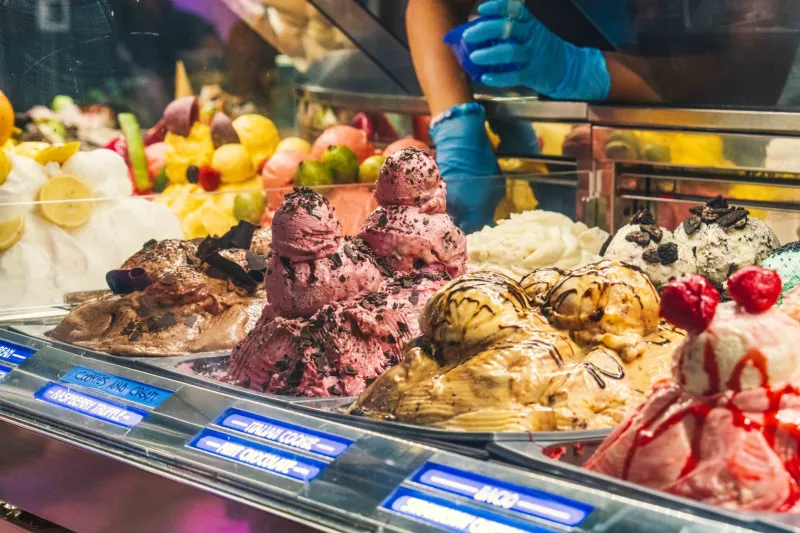
Less Fat, More Flavor: The Surprising Science Behind Why Gelato Hits Different
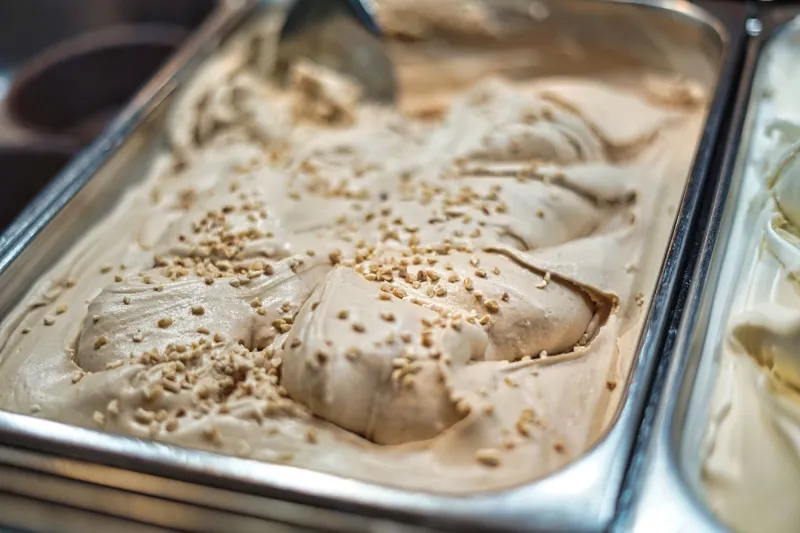
You've probably had that moment. You take a spoonful of gelato — maybe pistachio, maybe a bright, jammy strawberry — and something registers in your brain before you can even name it. It's more. More intense. More velvety. More present. And then the thought creeps in: wait, isn't this supposed to have less fat than ice cream?
Yep. It does. And that's exactly the point.
The relationship between gelato and ice cream is a little like the relationship between a hand-stitched leather jacket and a mass-produced one. On the surface, they look like they're doing the same job. But once you put one on, you understand why the other one exists.
The Fat Factor (And Why Less Is Actually More)
American-style ice cream typically contains between 14 and 25 percent butterfat. That's a significant amount — and fat, while delicious, has a funny side effect when it comes to flavor: it coats your taste buds and slows down how quickly flavor compounds reach them.
Gelato, made in the Italian tradition, uses more milk than cream and typically clocks in at somewhere between 4 and 9 percent fat. That lower fat content means your palate gets more direct, unobstructed access to the actual flavor of whatever's in the mix — real pistachios, fresh fruit, high-quality dark chocolate. Nothing is muffled. Nothing is padded.
Think of it this way: fat is a bit like turning down the volume on your stereo. There's still music, but it's softer. Gelato turns the volume back up.
Air Is the Other Big Player
Here's where things get really interesting. Both gelato and ice cream are churned during freezing, and that churning process incorporates air into the mixture. The amount of air whipped in is called overrun, and it has an enormous impact on the final texture and flavor concentration.
Commercial ice cream can have an overrun of 50 to 100 percent — meaning up to half of what's in that carton is literally just air. It's what makes a lot of grocery store ice cream feel light and fluffy but also somehow... thin.
Gelato is churned more slowly and at a lower speed, keeping overrun between 20 and 35 percent. The result is a denser, heavier product. A cup of gelato actually weighs more than the same-sized cup of ice cream. You're getting more actual food per bite — and more flavor per spoonful.
Temperature: The Detail Nobody Talks About
There's one more piece of this puzzle that doesn't get nearly enough attention: serving temperature.
Ice cream is typically served at around 10°F or below. At that temperature, it's firm, slightly numbing on the tongue, and takes a moment to melt and release its flavors fully.
Gelato is traditionally served at a warmer temperature — somewhere between 10°F and 22°F, depending on the style. That softer, almost spreadable consistency isn't a quality issue. It's a feature. At that warmer temperature, gelato melts faster on your tongue, releasing flavor compounds more quickly and more completely. Your brain processes it as more intense, more satisfying, and more complex.
This is also why authentic gelato has that signature silky, almost fluid texture when it's served correctly. It's not soft-serve. It's not melting. It's just operating exactly as it was designed to.
The Ingredient Question
Beyond the physics, there's the matter of what actually goes into the mix. Traditional Italian gelato leans heavily on fresh, whole ingredients — real fruit, high-quality nut pastes, proper dairy. Because the flavor has to carry the whole experience without the crutch of excess fat or air, there's nowhere to hide a mediocre ingredient.
A lot of commercially produced frozen desserts — even ones marketed as "gelato" — rely on artificial flavors, stabilizers, and colorings to hit a price point. If that pistachio gelato is neon green and tastes vaguely of almond extract, it's probably not working with real pistachios. Authentic pistachio gelato has a muted, natural color and a flavor that's earthy, slightly sweet, and genuinely nutty.
The same goes for fruit flavors. Real strawberry gelato made with ripe fruit tastes like summer in a cup. Artificially flavored versions taste like the idea of strawberry — recognizable, but hollow.
So What Should You Actually Look For?
If you're shopping for premium gelato — whether in a gelateria or online — here's a quick guide to spotting the real thing:
Natural colors. Pistachio should be pale green. Hazelnut should be a warm tan. Mango should look like mango, not a traffic cone. Vivid, uniform artificial colors are a red flag.
A shorter ingredient list. Authentic gelato doesn't need a chemistry lab's worth of stabilizers and emulsifiers. Milk, cream, sugar, eggs (in custard-based styles), and the primary flavor ingredient should be doing most of the work.
Dense, not fluffy. Real gelato has weight to it. If a container feels surprisingly light for its size, that's overrun doing its thing — and not in a good way.
Flavor that lingers. Because gelato is denser and lower in fat, the flavor tends to stay with you longer after you finish a bite. That's a good sign.
Transparency about sourcing. Brands that care about their product will tell you where their ingredients come from. Look for specifics — not just "natural flavors," but actual named ingredients.
Why We Do It This Way at Ono Gelato Company
At Ono Gelato Company, we're not trying to reinvent the wheel. We're trying to honor it. Every batch we make follows the principles that have guided Italian gelato-making for generations — real ingredients, slower churning, proper serving temperatures, and an obsessive focus on flavor clarity.
We think your taste buds deserve the unfiltered version. The one where the chocolate actually tastes like chocolate, the hazelnut actually tastes like hazelnuts, and every spoonful reminds you why you fell in love with frozen dessert in the first place.
Your brain might not always be able to articulate the difference between gelato and ice cream. But your taste buds? They always know.