Scoops, Stories, and Centuries: How Gelato Became the World's Most Beloved Frozen Dessert
Scoops, Stories, and Centuries: How Gelato Became the World's Most Beloved Frozen Dessert
There's a moment that happens to almost everyone the first time they try real gelato. It's not quite like eating ice cream. It's denser, somehow more vivid in flavor, and it melts across your tongue in a way that feels almost deliberate — like it was designed to make you slow down. That's not an accident. That moment has been centuries in the making.
It Started Long Before Refrigerators Existed
The story of gelato doesn't begin in a modern kitchen. It begins on the slopes of Mount Etna in Sicily, where ancient Arabs who settled the island in the 9th century brought with them a tradition of mixing fruit syrups with mountain snow. These early frozen treats — called sorbetti or granitas — were simple by today's standards, but they planted a seed. Sweet, icy, and intensely flavored, they became deeply embedded in Sicilian food culture, and they never really left.
Fast-forward to 16th-century Florence, and you find the dessert evolving in a very different setting. The Medici family, patrons of art and excess in equal measure, reportedly hosted a competition to find the most inventive frozen dessert in the region. A local architect and self-taught cook named Bernardo Buontalenti is often credited with creating an early version of what we'd recognize as gelato today — a chilled mixture of milk, eggs, honey, and flavoring, made smooth through careful technique. Whether the legend is entirely accurate or not, Florence during the Renaissance was undeniably a hotbed of culinary experimentation, and gelato was one of its greatest exports.
When Catherine de' Medici married the French King Henry II in 1533, she brought Italian chefs — and Italian frozen dessert traditions — straight into the French royal court. From there, the concept spread across Europe, picking up refinements along the way before eventually becoming the formalized craft we know today.
So What Actually Makes Gelato Different?
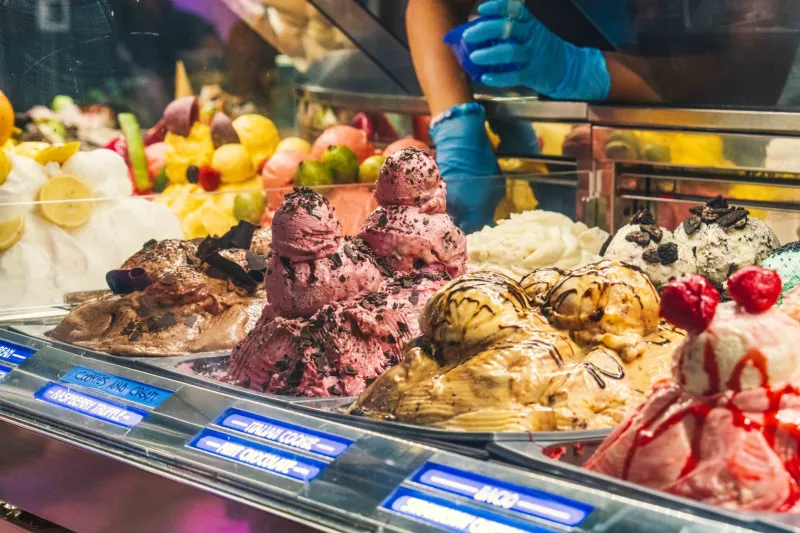
This is where things get interesting, especially for American dessert lovers who grew up on a steady diet of Ben & Jerry's and Baskin-Robbins. Ice cream and gelato might look similar at the gelato counter, but they're fundamentally different products — and those differences aren't just marketing speak.
Fat content is the first big distinction. American-style ice cream typically contains between 14 and 25 percent milkfat, which is why it has that rich, creamy heaviness. Gelato is made with whole milk rather than heavy cream as its base, bringing the fat content down to somewhere between 4 and 9 percent. Lower fat sounds like it should mean less flavor, but the opposite is actually true. Fat coats your taste buds and can mute the flavors you're trying to experience. With less of it in the mix, gelato's flavors — whether that's ripe strawberry, toasted pistachio, or dark chocolate — hit harder and linger longer.
Air incorporation is the second major factor. Ice cream is churned at high speed, which whips a significant amount of air into the mixture. That process, called overrun, can increase the volume of ice cream by 50 to 100 percent. Gelato is churned slowly and deliberately, incorporating far less air — sometimes as little as 20 to 30 percent overrun. The result is a denser, heavier product with a more concentrated texture. When you pick up a cup of gelato and it feels substantial in a way that a same-sized portion of ice cream doesn't, that's why.
Temperature is the third piece of the puzzle. Ice cream is typically stored and served at around 0°F, which keeps it firm and scoopable but also slightly numbs the palate. Gelato is served warmer — usually between 10°F and 22°F — which keeps it softer and more pliable. That slightly warmer serving temperature is part of why gelato melts so smoothly and why the flavors feel so immediate.
Put all three of those factors together and you get a dessert that's simultaneously lighter in fat, denser in texture, and brighter in flavor than its American counterpart. It's a different experience entirely.
The Craft Behind the Craft
In Italy, making gelato is a serious profession. Artisan gelato makers — called gelatieri — often train for years, learning not just recipes but the science of emulsification, freezing points, and flavor balance. Traditional Italian gelaterias change their menus with the seasons, sourcing local fruit at peak ripeness and celebrating regional ingredients. A gelateria in Palermo will taste different from one in Milan, and that's considered a feature, not a bug.
This hyper-local, handcrafted approach is what separates authentic artisanal gelato from the mass-produced stuff that sometimes gets labeled as gelato in American grocery store freezer aisles. Reading the ingredient list matters. Real gelato has a short one.
Bringing Old World Tradition to American Doorsteps
Here in the US, a growing number of gelato makers are taking those Italian traditions seriously — and that's exactly the spirit behind what we do at Ono Gelato Company. The name ono itself carries meaning: it's a Hawaiian word that translates to "delicious," reflecting a belief that great food should be joyful, approachable, and made with genuine care.
Our gelato is handcrafted in small batches, using high-quality ingredients and the same foundational techniques that Italian gelatieri have refined over generations. We're not cutting corners on fat content to save money, and we're not pumping air into our product to make the numbers look better. We're making gelato the way it's supposed to be made — dense, vivid, and built to be savored.
And because we believe everyone in the country deserves access to the real thing, we ship directly to your door. You don't need to book a flight to Florence or track down a specialty shop. The centuries of craft and tradition that went into perfecting this dessert can land right on your doorstep, ready to be scooped.
The history of gelato is a long one, stretching from Sicilian snow stalls to Renaissance banquet halls to artisan kitchens across Italy and now the US. But every time you taste a spoonful of the genuine article, you're experiencing the end result of all of that — the careful balance of ingredients, temperature, and technique that makes gelato something more than just a frozen dessert. It's a craft. And it's one worth knowing.